
Shooting down a single hostile drone is one thing, but eliminating the threat posed by a swarm of deadly drones is a next-level problem in search of solutions. The concern is twofold. One is strategic: an attack by cheap drones against a high-value asset like an aircraft carrier could cause a great deal of damage to both the ship and its aircraft. The second is economic: expending high-priced missiles against low-cost drones priced at under $50,000 each isn’t sustainable.
Toward that end, Lockheed Martin introduced a drone at this week’s Farnborough International Air Show in the UK that takes swarm defense airborne. The MORFIUS X-Rotor is a reusable counter-drone equipped with a high-power microwave (HPM) weapon that can neutralize more than 50 enemy drones in a single flight. One key attribute of the MORFIUS is that it is agnostic when it comes to sensors and command and control, so it will work with a wide range of military networks.
“MORFIUS sets a new benchmark for counter-drone capability—delivering a high kill rate while keeping cost per kill low,” said Randy Coates, vice president and general manager of Lockheed Martin’s missile and fire control advanced programs. Lockheed is moving ahead with prototype testing and additional flight tests.

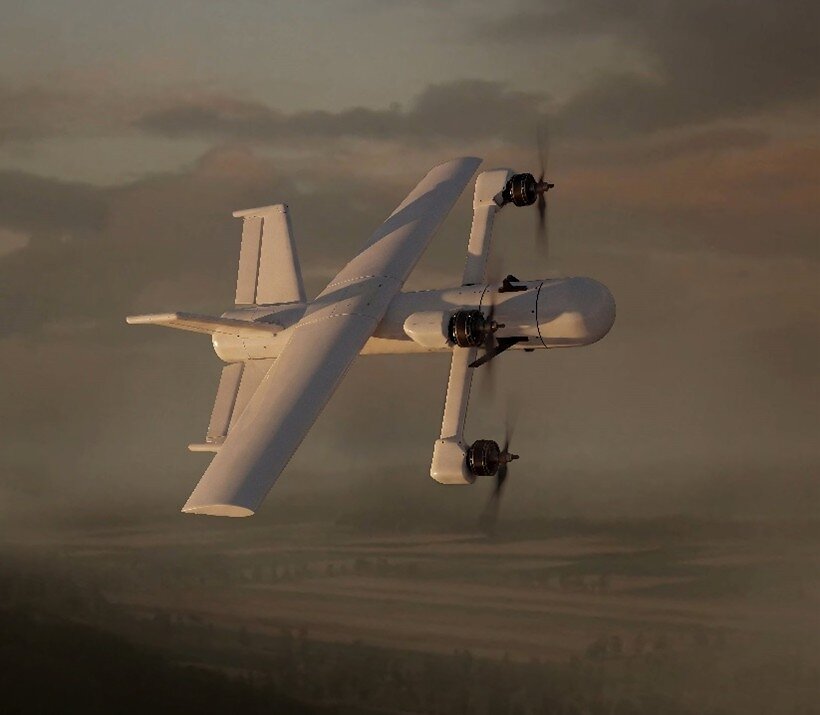
Photo credit: Lockheed Martin.
The Israelis, meanwhile, are developing a budget-conscious “soft-kill” drone defense that doesn’t rely on high-priced missiles. Developed by Israel Aerospace Industries (IAI), the ground-based Hypnosis system aims to disrupt drones that rely on satellite navigation for guidance. Hypnosis uses multiple ground stations to create an adaptive electronic shield to defend strategic sites. It is designed to be one element of a layered defense. Its combat-proven navigation warfare (NAVWAR) technology interferes with satellite signals across multiple frequencies, bands and directions.
Also in the mix are Star Wars-style laser weapons for swarm defense that promise fast shots at low cost. The Ukrainian military says it has a prototype laser weapon it expects to deploy in two to three months. British boffins, meanwhile, are focused on miniaturizing an existing laser weapon so that it can be installed aboard Type 45 destroyers. The Dragonfire laser weapon is expected to cost $13 per shot when it is deployed for a scheduled 2027 debut. Similar laser weapon programs are underway in the U.S., Germany and elsewhere.
Budget considerations are also in play when it comes to larger missile threats. Lockheed Martin is developing a baby Patriot missile that is a cheaper, albeit less effective, version of the storied Patriot PAC-3 missile interceptor, which can cost as much as $4 million per missile. The Adapted Capability Effector (ACE) would use a less expensive rocket motor, radar, and electronic brain to counter lower-tier threats, including cruise missiles and close- and short-range ballistic missiles such as Russia’s Iskander-M. American Patriot interceptors are reportedly in short supply after their extensive use in the Iranian conflict. Lockheed envisions joint development with European partners, a position that dovetails with President Trump’s granting Ukraine a license for the production of Patriots. Ukraine has already been developing its own version of a low-cost Patriot that would use less precise seeker sensors, for example. Ukraine’s Fire Point, a blossoming defense contractor, aims to keep the cost down to under $1 million per missile, according to media reports. While development time estimates vary, speed is the mother of invention in Ukraine.
Techstrong TV
Digital CxO Podcast
Digital CxO Webinars