
Longer-range drones guided by AI are becoming a potentially decisive weapon for Ukraine in its war with Russia, a development that may give Ukraine the upper hand as the number of attack drones reportedly flown by Ukraine exceeded those flown by Russia for the first time in March, according to multiple reports. Ukraine’s long-range drones are successfully hitting targets at more than 600 miles distance, damaging or destroying Russian oil facilities while also punching holes in Russia’s “iron ceiling” by eliminating radar installations. The rise of longer-range drones takes unmanned aerial vehicles to a new level of importance in military operations as numerous countries kick drones into warp speed production.
To be sure, military officials are hard at work figuring out how to fly drones further and keep them aloft longer. China, for example, recently tested a novel method to recharge drones while they are still in flight. The setup uses a wireless power transfer system to beam energy from the ground to the drone using microwaves. The energy is transferred to the drone via an antenna mounted below the drone. During the initial trial, the vehicle-mounted system kept a drone aloft for 3.1 hours at a height of 49 feet, according to the South China Morning Post. The idea is to develop an armored vehicle into a land-based aircraft carrier that would be both a launch platform and an energy hub. Drones would be able to recharge without landing to increase their operational endurance.
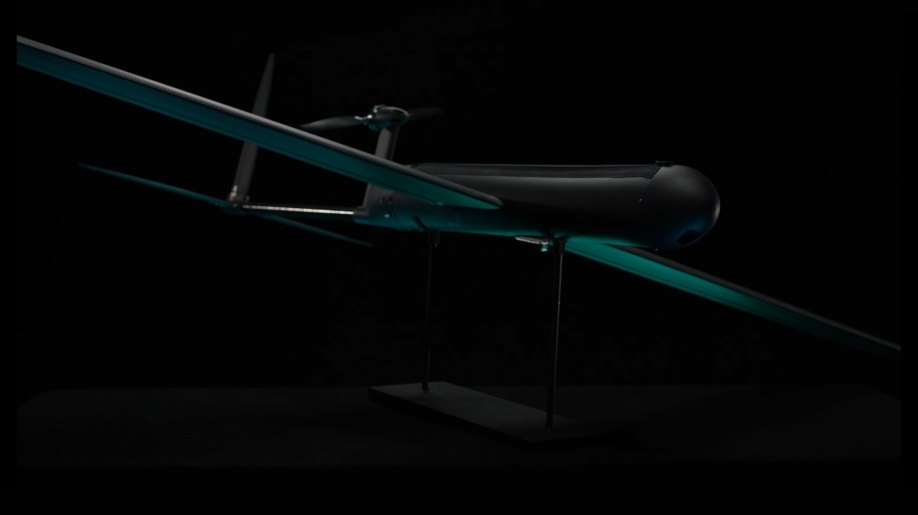
The U.S. Army’s new 250-mile-range Red Dragon drone from AeroVironment (Image: AeroVironment)

Meanwhile, in Ukraine, “distance is no longer a limitation” noted a Ukrainian official after witnessing a Wild Hornets test of a drone controlled by a pilot 1,240 miles away. AI is a critical enabler as the technology allows a long-range drone to autonomously navigate to its target without interference from a variety of communications jamming attempts and also recognize it when it gets there.
On the flip side, Ukraine’s long-range drone attacks reportedly are bringing pain to Russia’s supply chain, resulting in the production of drones said to be of lesser quality that are sometimes disintegrating in midair, earning them the moniker of “Flying Garbage.” The delta-wing configuration of Russia’s Geran-5 jet-powered drone introduced in January reportedly has been abandoned for a design more akin to a standard cruise missile.
Ukraine’s allies are applying similar sophistication to “midrange” attack drones with a range of around 300 miles. Germany is manufacturing a stealthy delta-wing “Anubis” drone for Ukraine that will be equipped with an Auterion software stack that includes AI-assisted navigation, electronic warfare resilience, and resistance to satellite communications jamming. Another midrange drone developed by Ukraine’s Wings & Quadro is especially resistant to electronic warfare, has a range of 150 miles and can stay aloft for 95 minutes. The United Kingdom says it will produce 120,000 “full stack” drones destined for Ukraine in 2026, many of which will have long-range strike and intelligence capabilities.
In a similar vein, the U.S. Army is acquiring a 250-mile-range Red Dragon drone from AeroVironment that can execute missions autonomously without continuous operator or satellite guidance. That’s likely the tip of the iceberg as the Trump administration wants to spend $75 billion on drone and counter-drone technologies in its 2027 budget proposal. The little-known Defense Autonomous Warfare Group (DAWG), which counts long-range drones in its remit, is slated for a $54.6 billion allocation. That’s a massive surge from the $226 million allocated in 2026, a signal that the Pentagon knows it has some distance of its own to catch up.
Techstrong TV
Digital CxO Podcast
Digital CxO Webinars