
Fresh concerns about the use of biometric surveillance tools like facial recognition in stores are being raised as the Wegmans grocery chain implements its use at locations in New York City.
What has some New York City shoppers spooked is a decision by Wegmans to retain the collected images and videos for an indefinite period of time for security reasons. This is a reversal of the policy Wegmans adhered to in its initial 2024 pilot program which promised customer data would not be saved. The Rochester, NY-based Wegmans is a major presence across eight Eastern states and Washington, D.C with 110 stores.
Signs posted in Wegmans stores advise customers that facial recognition data is being collected to “protect the safety of our patron and employees.” The Wegmans signs also note that eye scans, and voiceprints may also be included in customer data collection. Wegmans says that while it will not use the data to make a commercial profit, the data would be shared with law enforcement and unspecified third parties. Wegmans already routinely gathers license plate data on vehicles visiting its locations.
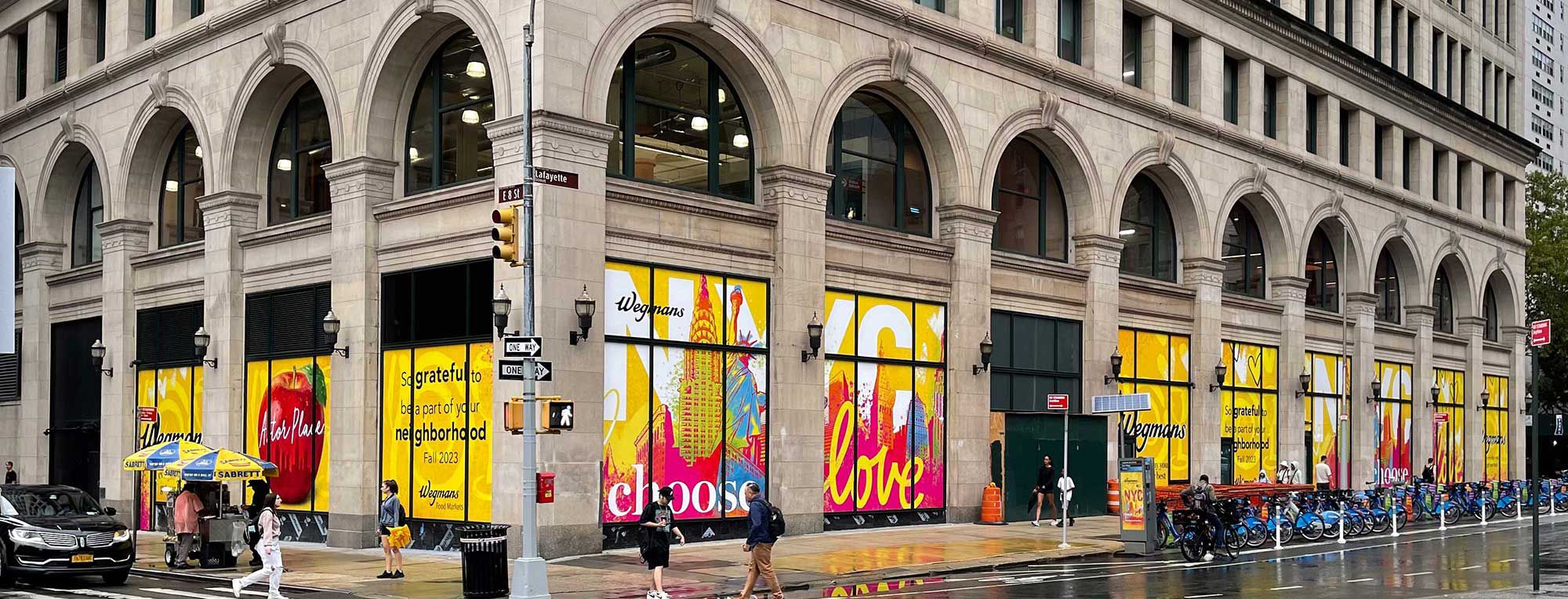
While Wegmans says biometric data is being collected only in stores with “elevated risks,” it is unclear what precipitated the rollout in New York City. There does not appear to be any major security incidents in recent years involving Wegmans in New York City, according to a Google search.
That’s not to say Wegmans has not experienced security woes in a number of its stores. In Downington, PA a man dubbed by police as “The Man With The Golden Prius” due to his “exuberant” vehicle allegedly stole a shopping cart full of merchandise on at least two occasions in August, 2025. More alarming is the bomb threat against a Wegmans in Buffalo in July. Wegmans also was among those stores targeted in a $71,000 theft ring in Pennsylvania in 2024. And not all security incidents are external—one employee fatally shot another at a Wegmans distribution center in Rochester, NY in July, 2025.
Wegmans is not alone in its biometrics collection in New York City. Fairway Market, Westside Market and Walgreen’s reportedly also collect customer facial recognition data. New York City law requires stores to post signs advising customers of biometric data collection but the law lacks enforcement power. Stiffer legislative measures have been proposed but have failed to pass. Whether this remains the case under the progressive administration of new Mayor Zohran Mamdani remains to be seen but the Wegmans move raises the issue’s profile in a manner not seen since Madison Square Garden CEO James Dolan infamously used facial recognition software to have enemies ejected from the venue in 2023.
Critics have long noted that facial recognition systems are often biased against women and people of color, producing high incidents of misidentification and false accusations. Given New York City’s diversity, facial recognition systems are faced with a challenge.
Facial recognition software also presents its own security concerns. While passwords, credit card numbers and other data can be changed if it falls victim to hackers, biometric data is a permanent identifier that can’t be changed. Biometric data collectors may find themselves liable for significant financial penalties if their security safeguards are breached. Violators of the Biometric Information Privacy Act (BIPA) in Illinois garnered stiff penalties when they didn’t properly safeguard biometric data.
In New York City, meanwhile, privacy concerns have an added dimension as some worry that their biometric data will be used by ICE federal agents seeking immigration information.
New Yorkers are likely to vote with their feet. “We should be able to shop freely without data being saved on us,” said Blaze Herbas, 29, in an interview with The Gothamist, a local news organization. “That’s obvious.” Blaze says she is now a former Wegmans customer.
