
They track skiers down steep mountain terrain. They follow sliders down narrow chutes. They fly in the air alongside ski jumpers. At the 2026 Winter Olympics, first-person-view (FPV) drones are giving Olympic television watchers views of performing athletes never before experienced. Better yet, FPV drones are the tools that allow real time data analysis by artificial intelligence of an athlete’s performance. If there is a gold medal for tech at the Olympics, drones are the clear winner.
While drones have been used previously in a limited fashion, this Winter Olympics drones seem to be everywhere. The Olympic Broadcasting Service (OBS) says it is using 25 drones to cover Milano Cortina events. In many instances, these Games mark the first time drones have been used to cover specific sports.
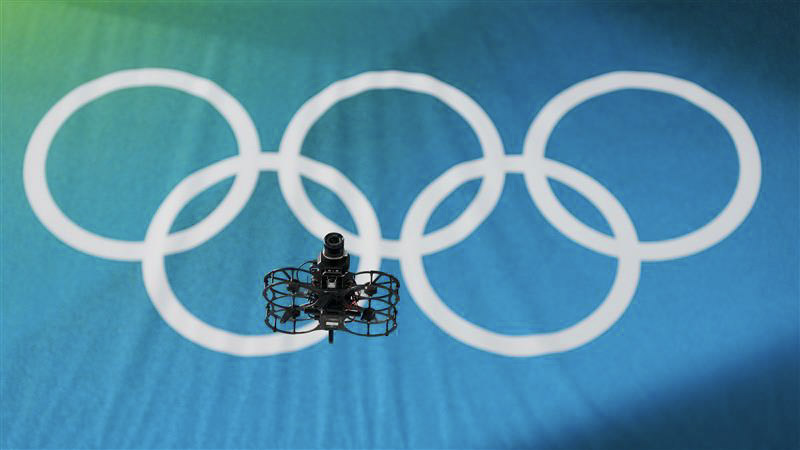
Photo: Olympic Broadcasting Services (OBS)
One of those is ski jumping. “This is the closest you can get to feeling a jump,” says FPV drone operator Jonas Sandall, who brings a unique insight to FPV use as a former ski jumper for Norway. Former athletes are in demand as FPV operators. “Every athlete accelerates and flies differently. If you don’t understand those subtleties, you miss the moment or outrun them.”
Another debut for FPV is in sliding sports (luge, bobsled and skeleton) which have previously been hard to cover with a reliance on fixed camera positions. Drones allow the TV production team to hold a single shot as the drone follows the athlete through multiple curves to convey the speed and precision involved. For events like the biathlon, which takes over a broad area, FPV drones make the gaps between competitors and the scramble for position much more dynamic.
The drones used for sports broadcasting are custom built. They use an inverted-blade design with propellers mounted below for better aerodynamics and smoother flight curves, a vital attribute for navigating steep descents and tight curves. The drones reportedly can provide excellent footage while traveling at speeds of up to 75 mph. Batteries are designed for swift replacement, typically lasting for two athlete runs before needing to be swapped out.
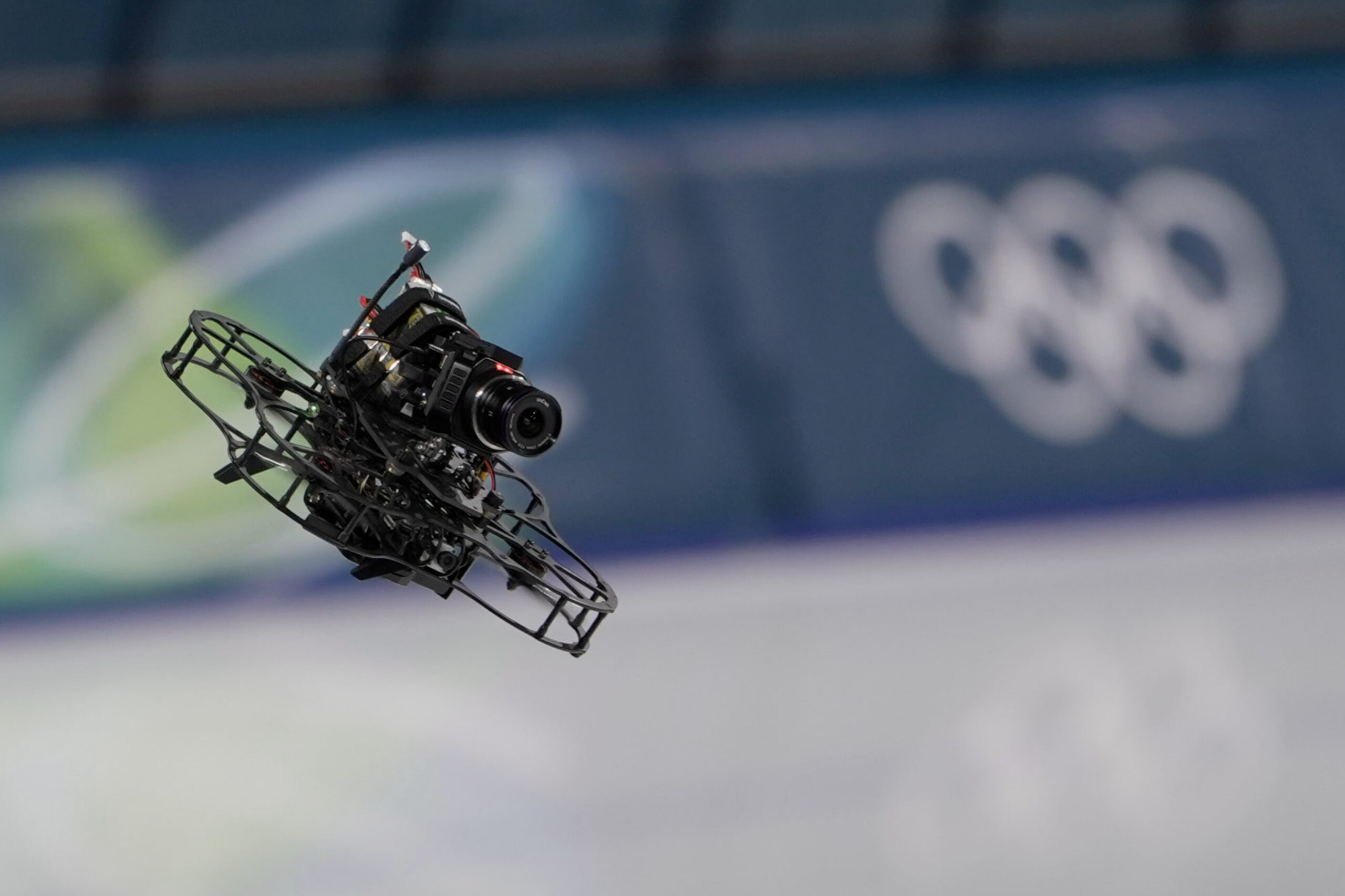
Photo: Olympic Broadcasting Services (OBS)
Drones are adding a dramatic component to every sport. Sometimes the drones are so close, TV viewers can hear the whine of the drone’s electric motors, an audible sound that is not a distraction to competitors as trial runs found. Many of the Milano Cortina locations are iconic in the sports world so drones provide a sense of place as well.
But it’s not just about compelling, immersive images. Drone footage is a key tool that offers viewers real-time AI analysis that appears on TV screens as frame-by-frame motion detection that conveys a deeper understanding of technique and nuance as well as an athlete’s decision-making process. The Olympics offer exceptional athletic performances and increasingly, it is drones that make them breathtaking to watch.
Techstrong TV
Digital CxO Podcast
Digital CxO Webinars