
AI is taking combat drones to new heights of lethality by allowing them to operate autonomously and avoid electronic countermeasures designed to defeat them. The development is most pronounced over the battlefields of Ukraine, long a live-fire testbed of drone technology but it is unlikely to stop there. AI drone tech is poised to expand into underwater operations as a submarine hunter.
“AI killer drones” are fast becoming a weapon of choice in Ukraine’s war against Russia, sometimes in combat situations that seem to cross centuries. One recent incident documented on social media involved Russian cavalry charging across a battlefield only to be engaged by Ukrainian drones which first spooked the horses into unseating the riders before dispatching them, leaving the horses unharmed, in a bizarre example of precision targeting.
Details are often obscured for obvious security reasons but it’s clear that AI combat drones are being developed by a score of Ukrainian-based companies. But it’s also clear that American-linked developers are playing a big role. Among the most successful, according to the New York Times, is the Bumblebee AI drone developed by Eric Schmidt, the former Google executive, which reportedly boasts a 70 percent success rate, and Vermeer which has developed a camera-based visual positioning system (VPS) kit that enables drones to navigate without recourse to radio and GPS signals that are routinely jammed by opposing forces.
Early iterations of AI drones were often confused by trees, buildings and other obstacles but with an AI drone, every flight is a learning experience that improves subsequent performance. AI targeting has become more precise, evolving from an ability to simply target a tank, for example, to maneuvering to find the tank’s weakest point. AI also is being used to manage 50,000 video streams received from the front per month for analysis by Ukrainian intelligence. NATO has developed an AI cloud-based data analysis solution for Ukraine to manage the flow that is set to become operational in January, 2026.
Critically, AI drones haven’t eliminated humans from the targeting process except in instances when communication is lost in the last few feet. AI, however, is turning drone operators who once were only able to fly a single drone into wing commanders able to control multiple drones all at once. This allows AI drones to swarm a target and increase the chances of success. The “human in the loop” requirement is evolving into a “human on the loop” tactical concept that allows individual drones autonomous maneuvering but with human oversight.
Another way AI is impacting drone warfare is enabling drones to be controlled by an app, dispensing with the need for piloting skills. The drone will automatically fly to the designated target, drop its payload, assess the damage and return to base, according to Ukrainian drone maker The Fourth Law in a BBC report. These kinds of capabilities are vital for a Ukrainian army short of manpower. At the same time, Ukrainian commanders are well aware that AI can make mistakes so granting AI drones full autonomy is not in the cards. “Friendly fire” incidents involving AI is something Ukraine cannot afford.
Ukraine is creating a defensive “drone wall” on its Eastern flank that is being strengthened by AI that improves targeting but also helps extend the “kill zone” within which drones can effectively operate. Relatively inexpensive AI drones are now a substitute for scarce artillery rounds. New AI drones are extending their range beyond what was once a line of sight limitation. For example, the new 12-kilogram HX-2 is a tank killer from Helsing, a leading European arms maker. The HX-2 has an onboard AI for autonomous operation and has a range of up to 62 miles with a top speed of 136 mph.
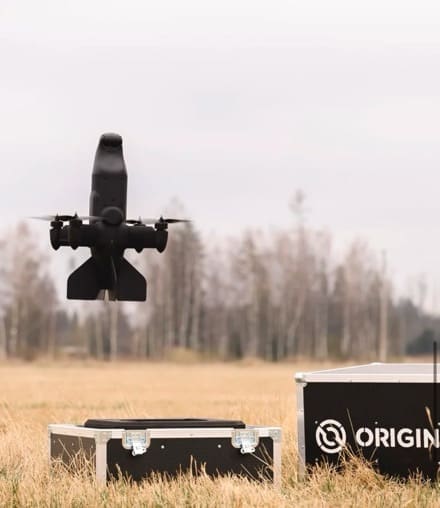
Battlefield necessity has turned AI drones into the proverbial genie that won’t get back into the bottle. Every military, including Russia’s, is taking note of Ukraine’s innovative use of AI drones and is rushing to emulate it. Or defeat it as in the case of Latvia which is deploying otherworldly-looking Blaze AI drone interceptors packed with high explosives, made by home-grown Origin Robotics, along its border. Origin Robotics is a supplier of weaponized drones to Ukraine. Belgium is spending $50 million to buy the newly-developed, man-portable Blaze craft following a spate of unidentified drone sightings around airports, military bases and other critical infrastructure in recent weeks, giving AI drone interceptors what may be a vital role in what many are calling a “hybrid” war already underway with Russia.
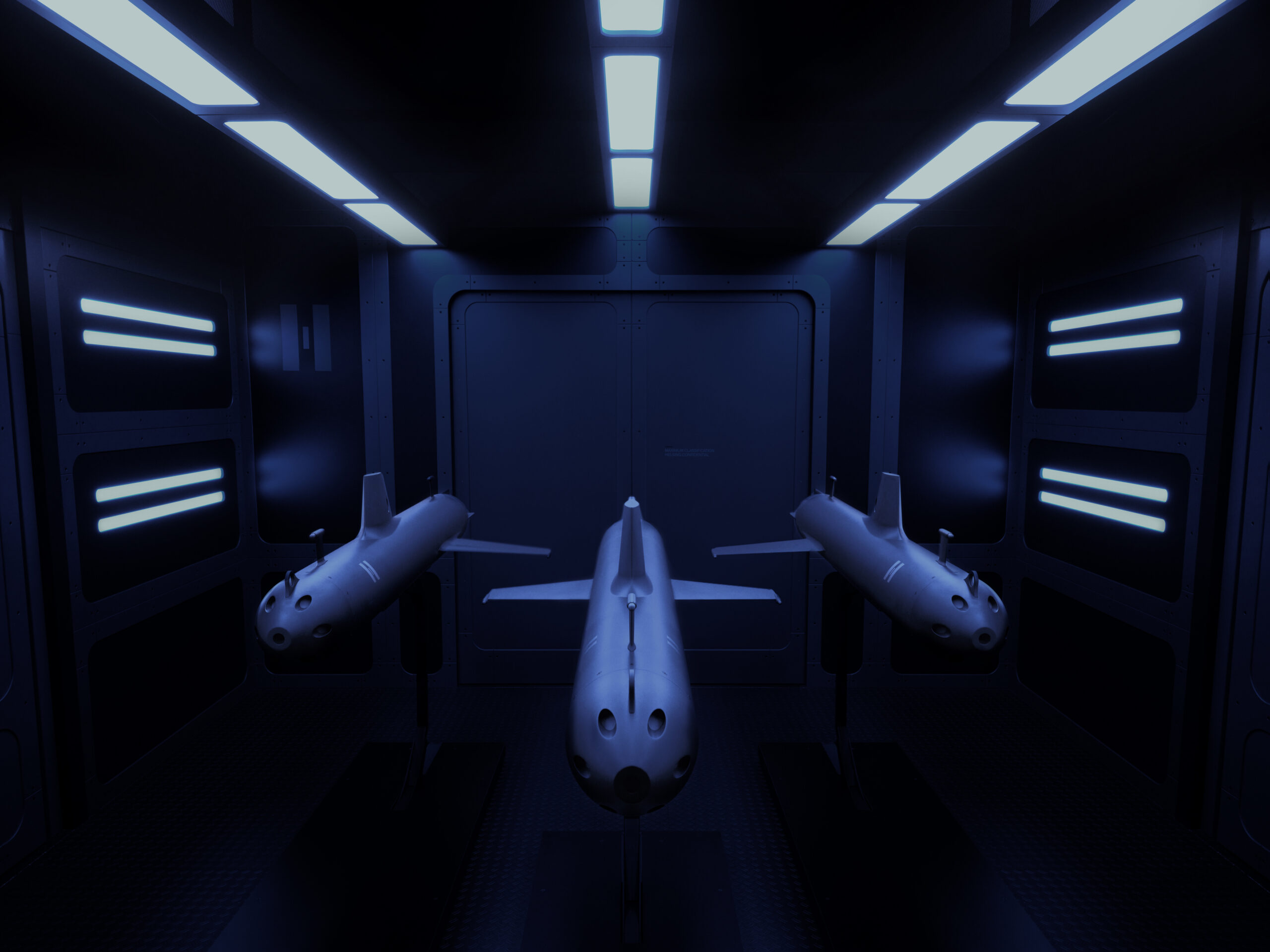
And maybe take it one step further. Helsing is developing an underwater drone called the SG-1 Fathom that employs AI software called Lura. The SG-1 is designed to “Illuminate the oceans” by detecting and identifying the acoustic signature of ships and submarines and can deploy for three months. A single operator can control a swarm of hundreds. Arming them seems only a matter of time.
Techstrong TV
Digital CxO Podcast
Digital CxO Webinars