
AI-powered robots are about to pull shifts on factory floors. Among the first plants to employ a large humanoid workforce will be Hyundai’s Metaplant America in Georgia, followed by the South Korean company’s Kia auto plant, also in Georgia. Hyundai says it will employ 25,000 Atlas robots made by its American subsidiary Boston Dynamics starting in 2028.
Similarly, the U.K. robot maker Humanoid says it will supply thousands of robots to two German plants owned by Schaeffler, a motion tech manufacturer. The first robots are scheduled to start box-handling work by the end of the year. Humanoid recently struck a deal with Siemens to deploy its HMND 01 Alpha robot to a Siemens electronics factory in Erlangen, Germany. Factory environments are seen as prime locations for humanoid use as they can be precisely mapped for easy navigation by robots.
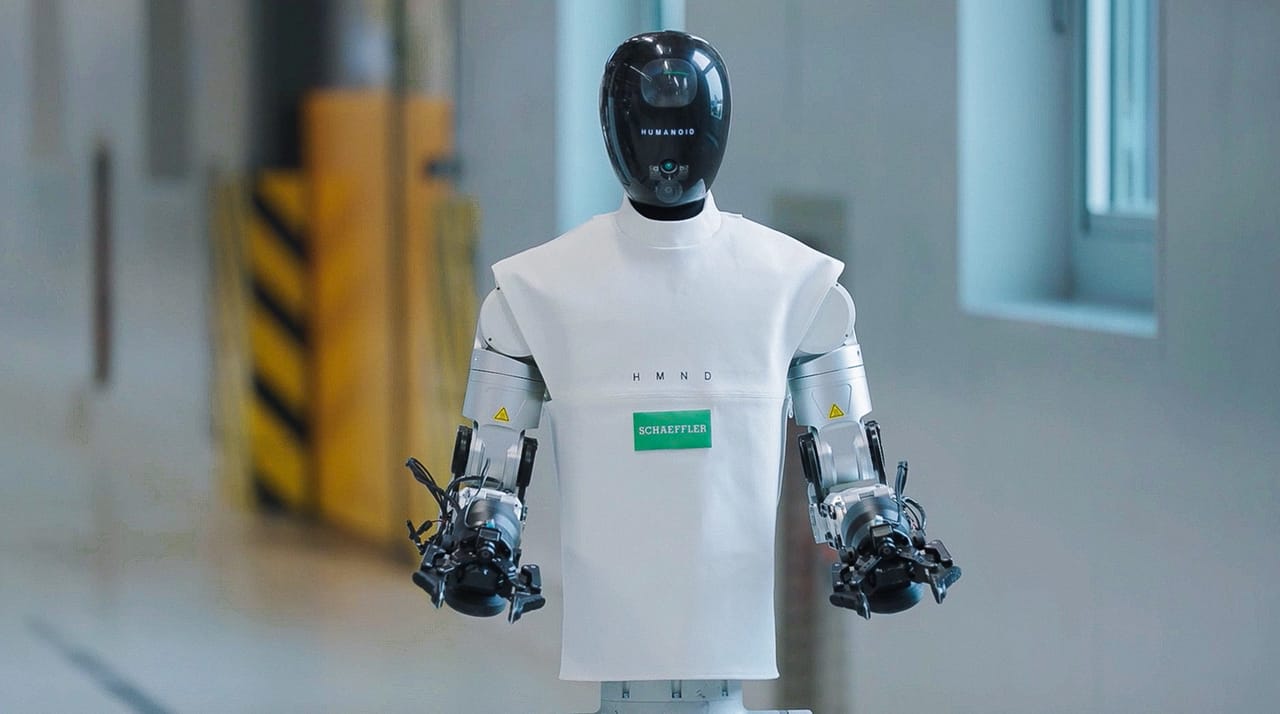
Photo credit: Humanoid

The Boston Dynamics Atlas robot is prepared to do some heavy lifting. A new blog post from Boston Dynamics includes a video clip of Atlas lifting a mini-fridge and carrying it. The company says this is a major step away from reliance on camera-based guidance systems. The Atlas robot uses reinforcement learning techniques so the robot can “put its whole body into it” using arms, knees, upper body rotation and balance. Haptic sensors and proprioception analysis sense balance, weight, grip and resistance, adjusting in real time to unstable loads and changing conditions. Atlas can operate autonomously, be teleoperated or controlled using a tablet interface.
Simply put, Atlas is “a general purpose tool for physical work.” Hyundai believes if the repetitive tasks of lifting, moving and assembling performed by humans in an automotive plant can be done by robots, then humanoids will demonstrate their economic viability. Hyundai appears to think its bet on humanoids is a sure thing as it plans to scale up Atlas humanoid production at Boston Dynamics to 30,000 units per year, according to Korean media reports. A longer term target is 50,000 humanoids per year which would lower individual costs to around $30,000 per robot. Boston Dynamics has an “anti-weaponization” policy, recently enacted to void the sale of its robotic dog Spot to a police equipment supplier over employee concerns that Spot would be used for crowd control.
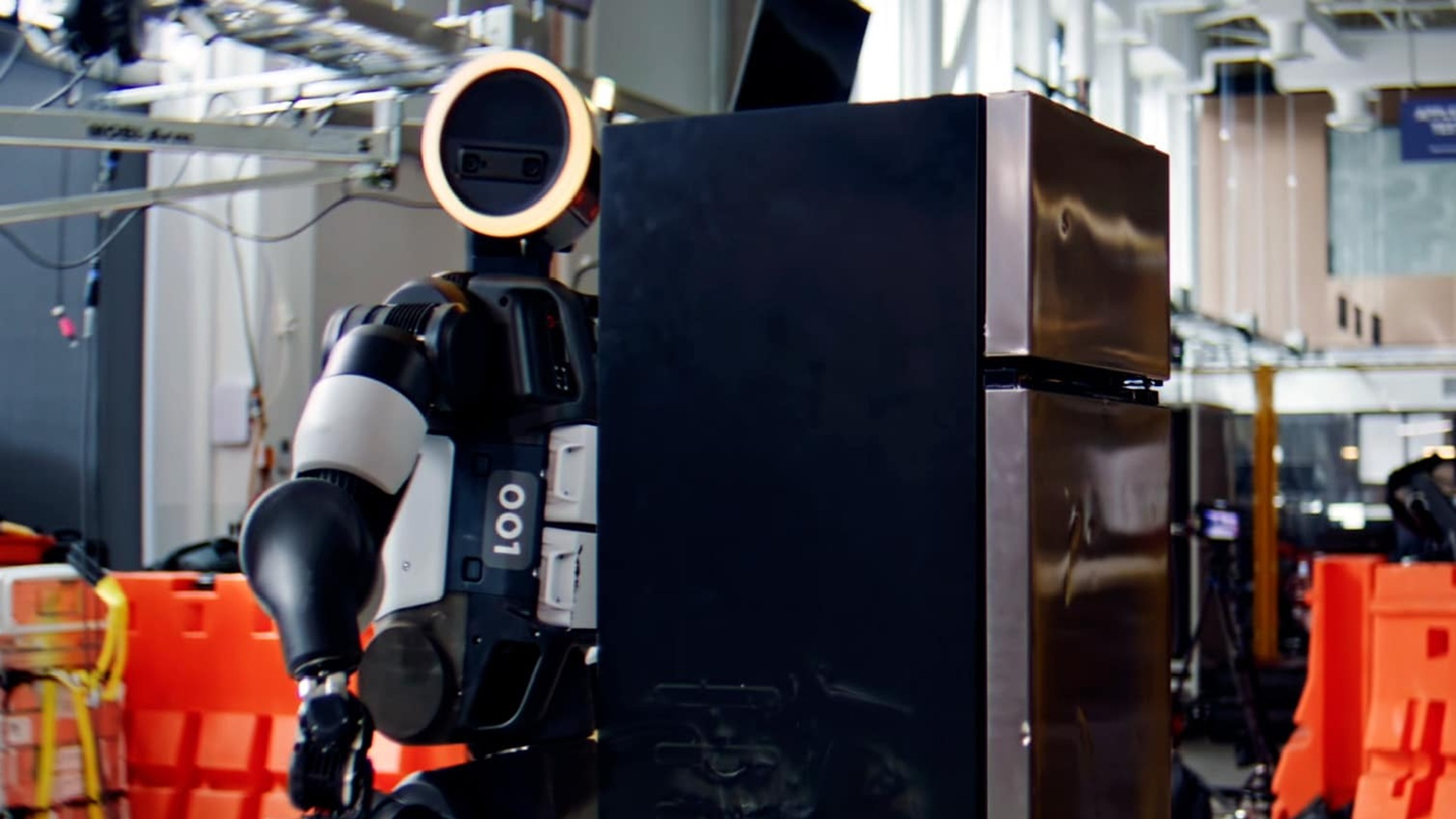
Photo credit: Boston Dynamics
Waiting in the wings is Figure AI, which is boosting its website traffic with live video of its Helix-02 AI robot endlessly sorting packages in a factory setting. In another demonstration, the Figure AI humanoid unloaded and reloaded a dishwasher in four minutes. Figure AI also recently demonstrated multi-robot collaboration with two robots coordinating their actions to reset a bedroom in under two minutes, a capability that may be of specific interest to the hotel hospitality industry now that union hotel workers in New York City just signed a contract that would pay them $100,000 per annum.
Also waiting in the vestibule is Elon Musk’s Optimus humanoid. The long-heralded Tesla robot may see the light later this year as Musk feels the pressure of robotics developments proceeding at a faster pace than many anticipated. Some are already seeing the rise of “dark factories” devoid of humans.
Many eyes, though, will be focused on the Boston Dynamics Atlas robot which has demonstrated, along with robots from numerous Chinese competitors, a flexibility and dexterity that makes C-3PO of Star Wars fame look like an arthritic clunker. Any future C-3PO, in fact, may have to pass muster to stay operational. China is proposing humanoid robots be issued a 29-character digital ID that would record brand, manufacturer, country of origin and maintenance record. Future humanoids will have better legs than C-3PO. The ones that don’t may have fake IDs.
Techstrong TV
Digital CxO Podcast
Digital CxO Webinars