
Drone innovations are arriving at a fast and furious pace but the successful first flight of an autonomous seaglider is turning heads in defense circles for its unique use of wing-in-ground (WIG) technology and the new potential mission capabilities it offers.
The WIG drone is called Squire and it is made by Regent, a Rhode Island-based company that has been pioneering electric WIG applications for several years. WIG aircraft often have the advantage of being able to fly fast and low for long distances over water. The WIG effect is a cushion of air that forms between the wings and the ground during low altitude flight. While the WIG effect is well-known in aviation, Regent adds the use of hydrofoils like those seen in catamaran racing in the America’s Cup. The hydrofoils add a quick takeoff time, reducing the effect of drag and improving energy consumption.
The WIG effect traces back to the Cold War when the Soviet Union built the Ekranoplan, a massive WIG craft nicknamed the Caspian Sea Monster. To the relief of Western intelligence agencies, the Russians were unable to successfully develop the Ekranoplan beyond test flights. The Squire is the first WIG craft to be developed for purely defense purposes in North America, says Regent. The Squire gets its own designation, USA-V, which stands for Unmanned Surface and Aerial Vehicle.

“Defense customers require platforms that can operate across wide maritime areas with speed, range and mission flexibility without relying on traditional and often vulnerable infrastructure,” says Tom Huntley, general manager of Regent Defense. “Squire is designed to meet that exact need.”
Squire specifications include a top speed of 70 knots (81 mph), a range of around 100 nautical miles, and a 50-pound payload capacity. Its most important attribute, however, may be its ability to fly below enemy radar. Missions would include intelligence, surveillance and reconnaissance (ISR), as well as search and rescue and anti-submarine roles.
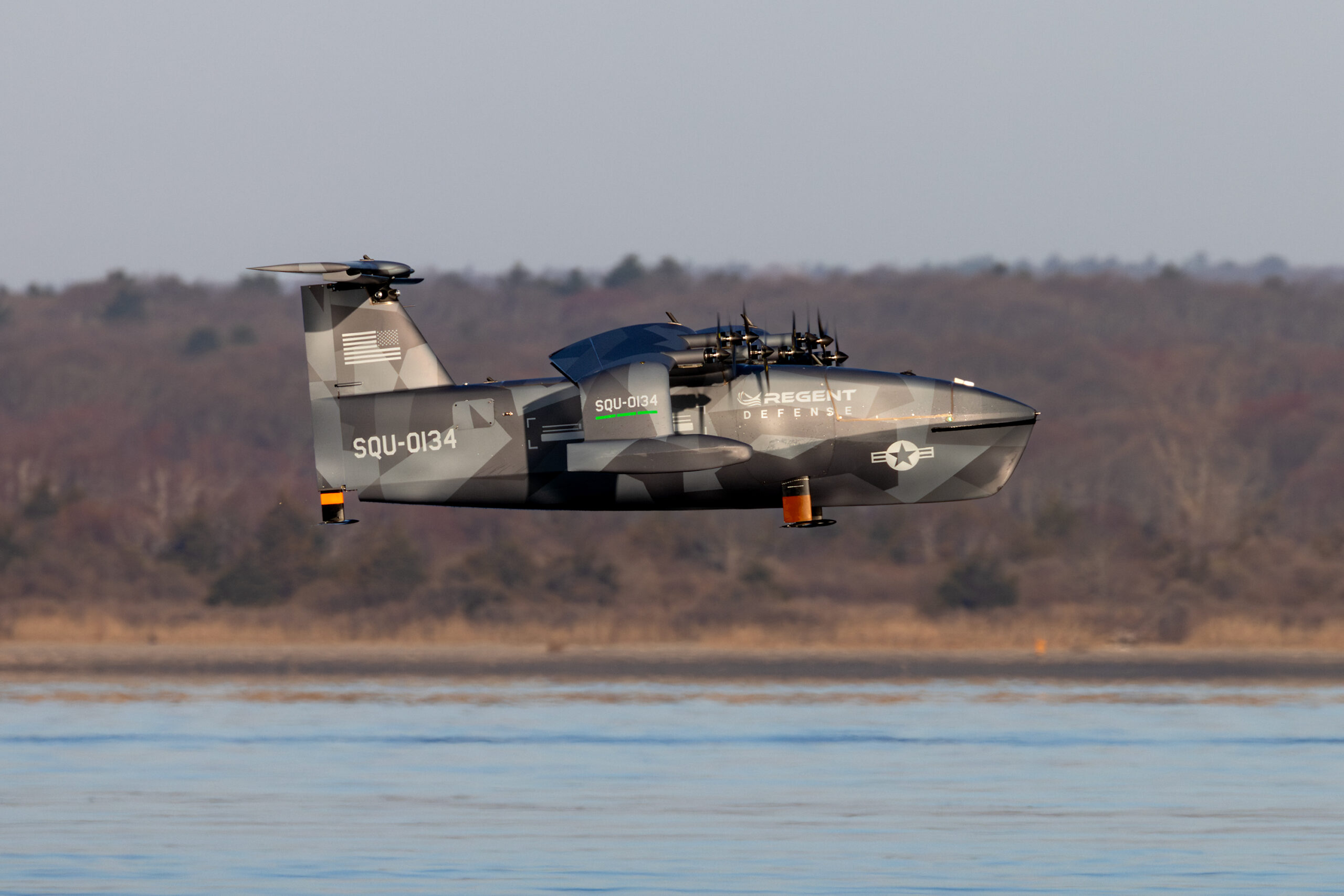
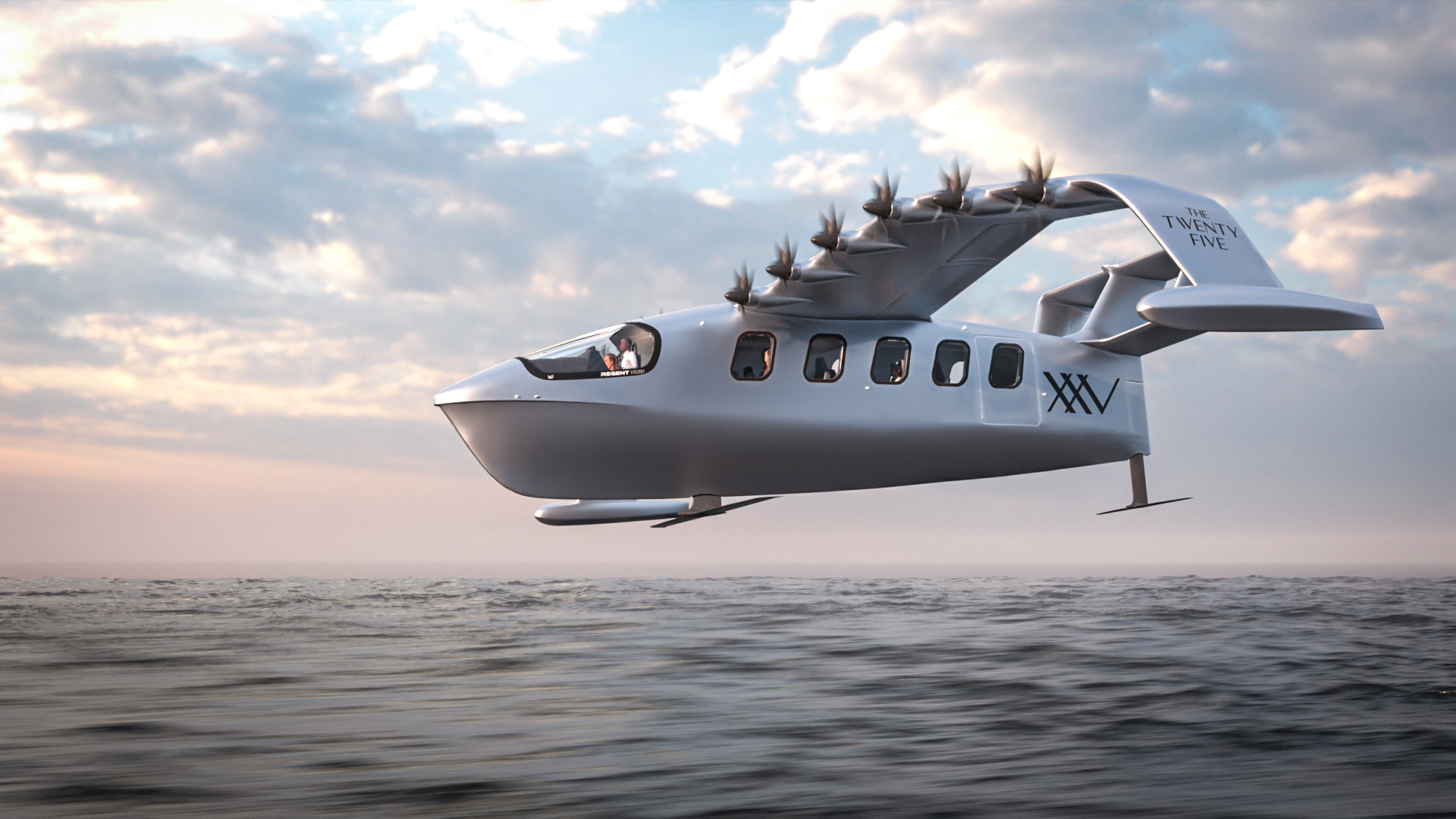
Regent is already on the radar of U.S. Secretary of War Pete Hegseth. Regent has a $15 million contract with the U.S. Marine Corps. In addition to Squire, Regent’s larger Viceroy seaglider model is capable of inserting and extracting rapid response teams, responding to medical emergencies and aiding in rescue missions at sea. The Viceroy is 57.5 feet long and has a wingspan of 65 feet. Payload capacity is 3,500 pounds. Cruising speed is 180 mph and the seaglider has a range of 1,400 nautical miles. Sea trials for the 12-passenger Viceroy are underway.
Missions in the Pacific theater appear to be foremost in mind. Seaplanes played a vital role in World War II and the Korean and Vietnam conflicts but the U.S. military currently lacks a similar amphibious capability. Japan’s ShinMaywa US-2 is generally considered to be the most capable military seaplane that could be potentially available to the U.S. military. China currently flies the largest amphibious aircraft, the jet-powered AG600, which has drawn comparisons to the Soviet-era Ekranoplan.
On the commercial side, a private members club called the Twenty-Five (XXV) plans a 50-minute Viceroy seaglider service between Boston and Nantucket in 2027. Other XXV routes are likely to include Manhattan to the Hamptons and Miami to the Bahamas. Ultimately, seagliders are expected to play a role in coastal markets where airport expansion is difficult. Regent says 600 Viceroys have been pre-ordered totaling $10.5 billion in sales.
Techstrong TV
Digital CxO Podcast
Digital CxO Webinars