
HG Insights this week added an additional context layer to its platform for sales teams working for IT vendors to reliably use artificial intelligence (AI) agents to find new opportunities and prevent existing accounts from being pilfered by rivals.
The Contextual Intelligence Platform enables go-to-market (GTM) teams employed by IT vendors to confidently deploy AI agents to continuously track usage, spending, leads, buyer intent signals and contacts in a more unified way, says Francis Brero, vice president of AI strategy for HG Insights.
HG Insights has developed a set of AI agents, dubbed Copilots, that are trained to assess markets, optimize coverage, target accounts, build audiences, and engage buyers. Armed with those insights, it then becomes possible for sales and marketing teams to track intent signals, such as information shared in a 10K report filed with the Securities and Exchange Commission (SEC), to identify sales opportunities. An HG Superagent then interprets user requests, invokes the right specialist agents and assembles a report in less than 90 seconds.

Sales teams can also access a library of curated workflows and launch queries to, for example, size markets or create a targeted campaign.
The overall goal is to enable sales teams to grow their pipeline by surfacing actionable insights into the activities of existing customers and potential prospects, says Brero. Instead of painstakingly researching reports themselves, the Contextual Intelligence Platform makes it possible for sales teams to spend more time developing relationships, says Brero.
In addition to tracking sales opportunities, those insights also surface declines in activity that could be indicative of a competitor gaining ground in key accounts, he adds.
The data that HG Insights exposes to AI agents is a mix of first-party customer account data collected by organizations themselves, research data that HG Insights provides and third-party reports. Last year, HG Insights acquired TrustRadius, a research firm that surveys more than 12 million customers about their sentiments toward existing products they have deployed and future purchasing plans.
Rather than having to spend hours each week combing through all that data, the AI agents generate alerts that sales teams can use to have a more informed conversation with a customer, notes Brero. At the core of that capability is a data fabric and analytics platform that HG Insights has now expanded to include funding and acquisition intelligence and automatic updates to the structure of management teams that are mapped to purchasing authority. “We assign a unique identity to each data record,” says Brero.
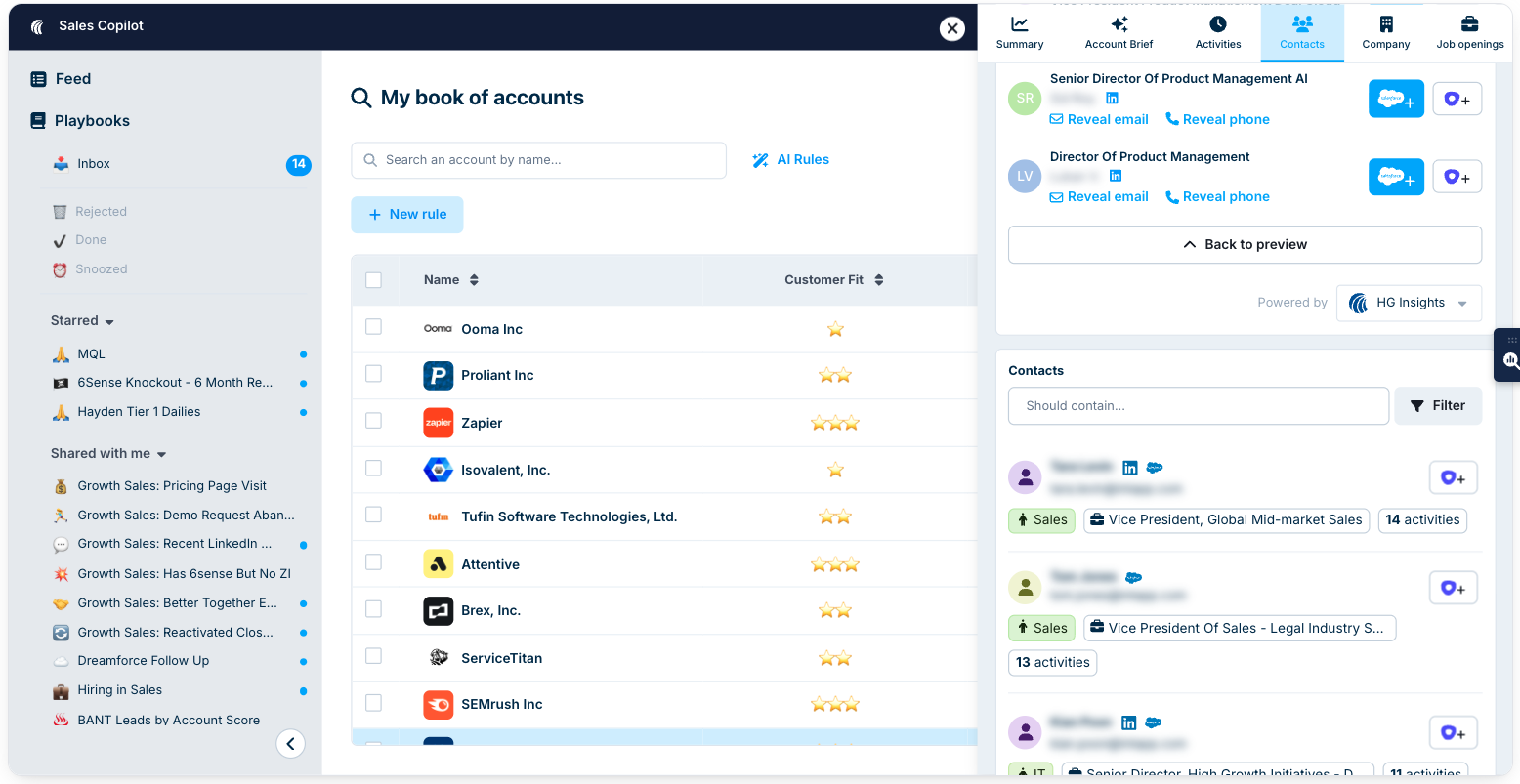
Each sales representative is presented with a dashboard that surfaces a ranked account list with research, engagement history and intent signals, suggested sales pitches and relevant contacts.
That data can also be accessed by other AI tools using a Model Context Protocol (MCP) server that has been embedded into the platform, notes Brero.
It’s not clear how aggressively or deeply sales teams are applying AI to customer research, but it’s clear that with each passing day more data and insights are becoming readily available. The challenge and the opportunity now is finding the best way to harness all those insights in a way that enables an organization to increase its share of the total addressable market.
Techstrong TV
Digital CxO Podcast
Digital CxO Webinars